Office Roller Blinds and Solar Shades: A Sourcing Guide for Commercial Interiors
A practical sourcing guide for office fit-outs: how commercial roller shades and solar screen blinds control glare, which fabrics suit each zone, and what to prepare before requesting a proposal.
2026/11/12
Reading volume: 0
News Details
Why Roller Systems Remain the Default for Office Glazing
Office fit-outs demand three key qualities from window coverings: screens that stay readable, consistent natural lighting, and a facade that appears cohesive from the street. Roller systems deliver all three with minimal components. A single fabric panel runs along side tracks or hangs from a covered tube, eliminating stacked slats that collect dust and pull cords at desk level.
This simplicity proves valuable at scale. For a floor plan with 40 openings, using the same hardware family across every window simplifies specification, installation, and maintenance. It also eases handover to facility teams, as staff only need to learn one operating method. For these reasons, commercial roller shades are typically the first category contractors price before exploring vertical, pleated, or Venetian alternatives.
The core performance question is not whether roller shades work for offices, but which fabric and control system are suited to each zone of the building.
Solar Screen Blinds: Understanding Openness Factor
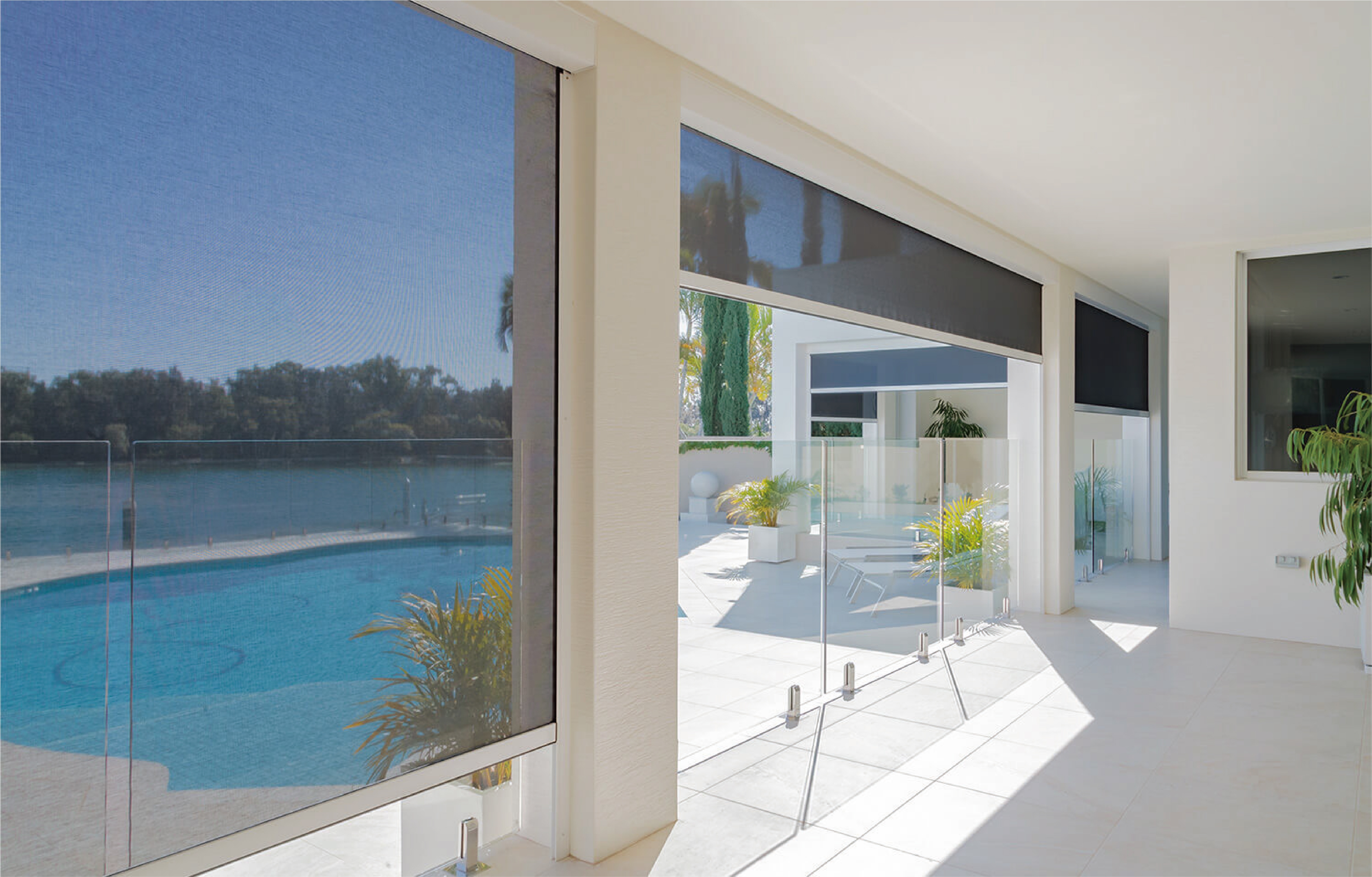
Solar fabric is a woven mesh rather than solid cloth. The weave is intentionally left partially open to preserve occupant views while diffusing direct sunlight. The percentage of open area, called the openness factor, is the key parameter determining glare control, view clarity, and perceived brightness.
Lower openness indicates a tighter weave. Less direct light passes through, glare reduces significantly, and daytime privacy improves, but outdoor views become blurred and the room appears darker. Higher openness maintains crisp views and bright interiors, but weakens glare control.
In practice, most commercial projects use a narrow optimal range of openness factors. Tighter weaves are used for screens installed close to glazing or on west-facing facades exposed to afternoon sun. Mid-range weaves suit open-plan spaces needing balanced light. More open weaves are selected for lobbies or showroom areas where views are an integral part of the design.
Two points are often overlooked during specification. First, openness is not the only variable; fabric color affects how bright a room feels and how clear the view appears. Second, solar screens do not function as privacy products at night. When interior light exceeds exterior light, visibility reverses. Meeting rooms facing the street typically require a second, opaque layer rather than a tighter screen.
Matching Fabric to Each Building Zone
Glare is a localized issue, not a building-wide problem. Using a single fabric across an entire floor typically over-darkens north-facing rooms and fails to adequately control light in west corners. Splitting the floor into zones and documenting specific requirements for each is the most effective way to prevent future complaints.
| Zone | Fabric Direction | Solution |
| Open-plan desks facing glass | Tight solar weave | Prevents screen washout and veiling reflections on monitors |
| Perimeter circulation and break areas | Mid-range solar weave | Reduces heat at the glass line while preserving views |
| Meeting and video conferencing rooms | Blackout or dual roller | Enhances projector contrast, eliminates edge light bleed, and provides nighttime privacy |
| Reception areas and ground-floor street-facing spaces | Light filtering + sheer layer | Ensures eye-level privacy without creating a closed-off appearance |
Where a single window needs to serve two purposes, a dual roller bracket mounts two fabrics on one headrail: a solar screen for working hours and an opaque shade for presentations or evening use. This maintains a clean window line and eliminates the need for staff to switch products.
Blackout and Dual Roller Details That Determine Results
A blackout roller functions properly only if light cannot leak around the fabric. Side tracks, a valance, or a pocket detail seal gaps at the edges, and specifications should clearly state which of these features are included. This is the difference between a room that darkens adequately for a projector and one that still shows a bright outline on the wall.
For meeting rooms with video conferencing, the same edge detail also prevents backlighting on cameras. Where ceiling design allows, a recessed pocket hides the roller tube and provides a flush finish; surface-mounted headrails are a practical alternative for retrofits with limited ceiling depth.
Manual, Cord, or Motorized Operation
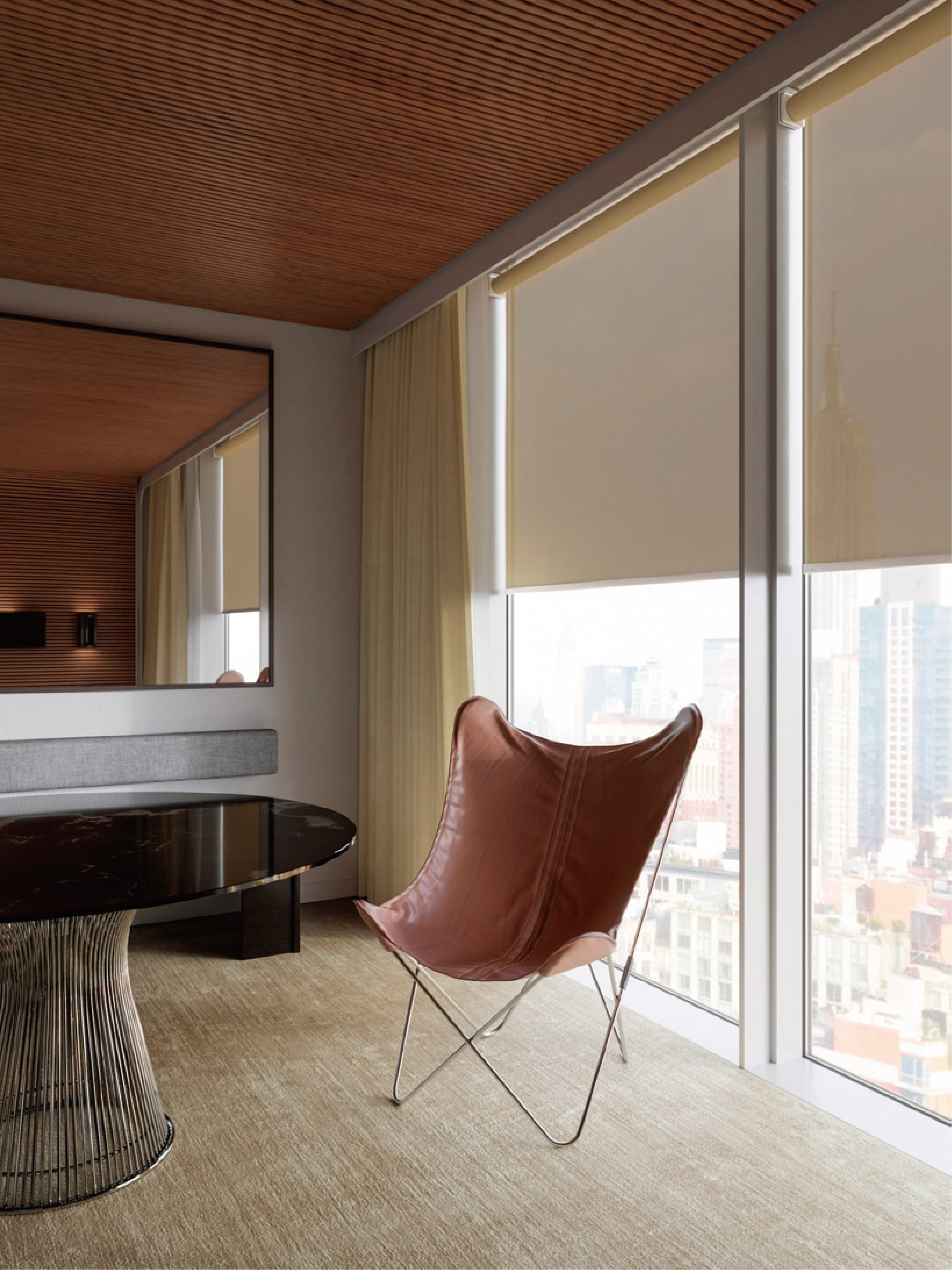
Most office windows can be operated manually. Cord-operated roller shades are affordable and easy to maintain, making them suitable for windows that staff adjust a few times a day. Limitations arise on tall glazing, in atriums, and on facades where multiple openings need to move together, as manual operation then becomes an unassigned daily task.
Motorized roller shades solve these access issues and allow a single switch, remote, or building control signal to operate a group of windows. They also make scheduled daylight management feasible: shades can lower before afternoon sun hits west-facing facades, rather than after staff report discomfort. For large projects, the decision typically depends on whether windows are easily accessible and whether the building already has a control system the shades can integrate with.
What to Prepare Before Requesting a Proposal
Supplier quotes are only comparable when all bidders receive the same detailed information. A concise project brief avoids weeks of clarification. Prepare the following before contacting an office roller blind supplier:
- Window Schedule: Width, height, and quantity per window, measured or taken from drawings, plus installation type (inside the recess, outside, or ceiling-mounted).
- Zone Requirements: Which rooms need glare control, blackout, and nighttime privacy.
- Fabric Specifications: Preferred openness range, color palette, and any requirements to match interior design schemes or facade aesthetics.
- Control Strategy: Manual, motorized, grouped, or integrated with an existing building system.
- Compliance Documents: Fire safety and cord safety documentation required by project specifications, to confirm these during the quotation stage rather than after ordering.
- Timeline: Required delivery and installation windows, including any phased access to occupied floors.
Samples come next. A physical swag allows the project team to hold the fabric against the actual glazing at the correct time of day, which is the only reliable way to judge how the screen will look in that room.
Working with a Roller Blind Supplier on B2B Orders
VistaDrape provides custom window treatments for commercial, hospitality, and residential projects, with roller blinds manufactured to project-specific dimensions and fabric selections. Project inquiries can start with a set of drawings or a measured window schedule, and fabric samples are typically reviewed on-site before final selection.
If you are specifying office window shades for an upcoming fit-out, send the window schedule and zone requirements to the VistaDrape team via the VistaDrape website to request an office shade proposal. Including the control strategy and compliance list in your initial inquiry streamlines the quotation process and ensures comparable responses.
Share to:


